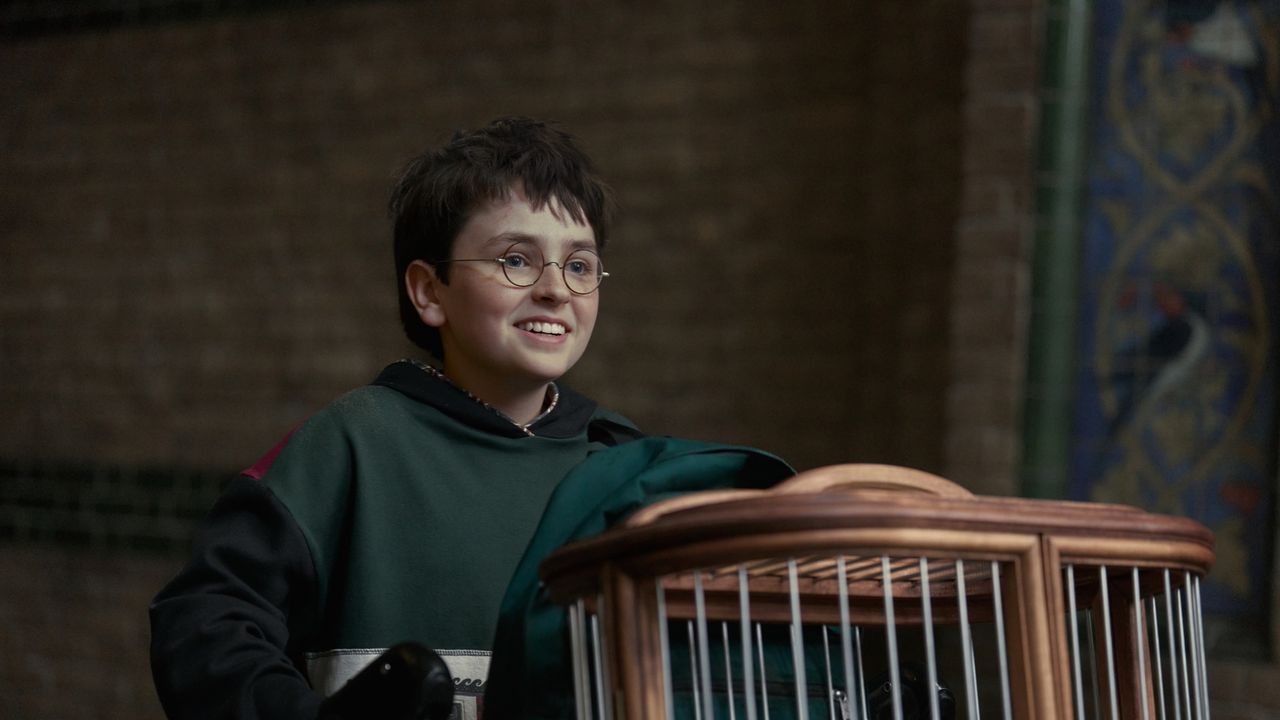
Harry Potter HBO: Why The Series Will Have Major Gaps Between Seasons
The wizarding world is set for an epic return, not on the silver screen, but as a sprawling television saga on HBO. The announcement of a new "Harry Potter" series, promising a season for each of J.K. Rowling's seven iconic books, has sent ripples of excitement through the global fanbase. Fans are buzzing, eagerly asking: When Does The New Harry Potter Series Come Out? While the initial joy for a deeper, more faithful adaptation is undeniable, a clearer picture of the series' production timeline reveals a truth that might require a touch of time-turner magic – significant gaps between seasons are not just likely, but practically guaranteed.
HBO Max has already confirmed that Season 1 of the Harry Potter series, titled "Harry Potter and the Philosopher's Stone" (or "Sorcerer's Stone" for US audiences), is set to debut on Christmas Day, December 25, 2026. This initial season will comprise eight episodes, promising a comprehensive exploration of Harry's first year at Hogwarts. But what about the subsequent six seasons? That's where the magic slows down considerably, transforming the series into a decade-plus commitment for both viewers and cast.
The Grand Vision: One Book, One Season – A Cinematic Undertaking
The new "Harry Potter" HBO series aims to deliver what the original film franchise, despite its monumental success, couldn't fully achieve: a truly in-depth adaptation of J.K. Rowling's intricate narratives. Each of the seven beloved books will be adapted into its own season, allowing for a meticulous exploration of character arcs, subplots, and the rich tapestry of the wizarding world. Casey Bloys, Chairman and CEO of HBO & Max Content, has emphasized this commitment, highlighting the opportunity for a "deep dive into each of the iconic books that fans have continued to enjoy for all of these years."
This ambitious "one book, one season" approach, with each season likely featuring around eight episodes, is a dream come true for purist fans. It means more time in the Muggle world with the Dursleys, a more detailed look at Harry's bullying in Surrey, and a faithful rendering of the myriad magical lessons, friendships, and dangers that define his journey. The recent teaser video, revealing glimpses of the new cast including Arabella Stanton as Hermione, Alastair Stout as Ron, and Paapa Essiedu as Professor Snape, has further ignited anticipation for this detailed retelling. However, this level of fidelity and detail comes with a significant trade-off: time.
Understanding the Production Hurdles: Why Annual Releases Are Impossible
While an annual dose of Hogwarts adventures would be ideal, HBO executives have been upfront about the logistical realities. Casey Bloys himself stated, "It would be nice to have those on an annual basis. But from a production point of view, it’s just not possible." He elaborated on the inherent complexities of such high-budget productions: "It’s not that everybody involved is just taking their time and sitting around. These shows are complicated to do."
Even without the added burden of rendering dragons or hordes of zombies, the magical world of Harry Potter demands extensive pre-production, intricate set design, elaborate costuming, and, crucially, a massive amount of visual effects (VFX). Every spell, every magical creature, every enchanted object, and every breathtaking landscape requires meticulous planning, execution, and post-production work. The writing process for each season alone is a monumental task, followed by months of filming and then an extensive post-production phase involving editing, sound design, and the aforementioned VFX. This entire cycle simply cannot be rushed without compromising the quality that HBO is known for and that "Harry Potter" fans expect.
To gauge potential release schedules, Bloys implicitly pointed to other major HBO productions as comparisons. Shows like *House of the Dragon* and *The Last of Us* serve as practical benchmarks for high-quality, VFX-heavy series with substantial gaps between seasons. For instance, *House of the Dragon* Season 2 premiered one year and ten months after its predecessor, with Season 3 projected for June 2026, creating a two-year gap. Similarly, *The Last of Us* Season 2 is arriving two years and three months after its first season. These timelines are not outliers but rather the norm for ambitious, premium television series.
The Long Wait: Projecting Season Release Timelines
If we apply the observed patterns from *House of the Dragon* and *The Last of Us* to the new "Harry Potter" series, the full journey from "Philosopher's Stone" to "Deathly Hallows" will indeed be a marathon, not a sprint. With Season 1 debuting in late 2026, subsequent seasons could follow a cadence of roughly two to two-and-a-half years apart.
- Season 1 (Philosopher's Stone): December 2026
- Season 2 (Chamber of Secrets): Potentially late 2028 / early 2029
- Season 3 (Prisoner of Azkaban): Potentially late 2030 / early 2031
- Season 4 (Goblet of Fire): Potentially late 2032 / early 2033
- Season 5 (Order of the Phoenix): Potentially late 2034 / early 2035
- Season 6 (Half-Blood Prince): Potentially late 2036 / early 2037
- Season 7 (Deathly Hallows): Potentially late 2038 / early 2039
This projection implies that the final season, based on *Harry Potter and the Deathly Hallows*, might not arrive until 2038 or 2039. This means that from the premiere of Season 1, fans could be waiting anywhere from 11 years (optimistic) to over 13 years and six months (realistic) to watch Harry finally defeat Voldemort. An initial HBO estimate suggested around 10 years for the full series, but current production realities indicate a longer haul, possibly up to 173 months from the first season's premiere to the last. This extended timeline underscores why the question of "When Does The New Harry Potter Series Come Out for its later seasons" has such a complex answer. For a deeper dive into the potential overall series length, you can read more about How the New Harry Potter Show's Full Series Could Take 13+ Years, and How the Cast Might Age.
The Aging Cast Conundrum
One of the most significant implications of such protracted production schedules is the inevitable aging of the cast, particularly the young actors portraying the Golden Trio: Harry, Ron, and Hermione. The original film series faced similar challenges, with Daniel Radcliffe, Emma Watson, and Rupert Grint visibly maturing across the eight films. However, the gap between films was typically one to two years, not two to two-and-a-half years between entire seasons, each covering a full book.
The young actors currently cast as Harry, Ron, and Hermione are reportedly around 11-12 years old, aligning perfectly with their characters' ages in the first book. By the time the season based on *Harry Potter and the Deathly Hallows* airs, these actors could be in their mid-to-late twenties – potentially 26 or 27. The characters in *Deathly Hallows* are around 17 years old at the story's start. This creates a potential age discrepancy of almost a decade between the actor and the character they portray, which could be a notable challenge for immersion.
Furthermore, the casting of veteran actors for key roles also presents unique considerations. For example, the acclaimed John Lithgow, who is 80, is reportedly cast as Dumbledore. If the *Deathly Hallows* season airs in 2039, Lithgow would be 93 or 94. While modern filmmaking offers solutions like de-aging technology or recasting, these are creative decisions that would need to be carefully navigated by the production team. The longevity of the project means that maintaining cast consistency, especially for such an iconic and lengthy narrative, will be a perpetual consideration for the showrunners.
Conclusion: Patience is a Virtue in the Wizarding World
The anticipation for HBO's new "Harry Potter" series is immense, promising an unprecedented deep dive into J.K. Rowling's beloved stories. While the excitement for Season 1 in December 2026 is palpable, understanding the realities of high-quality, large-scale television production is crucial. Significant gaps between seasons are not a matter of choice but a necessity for maintaining the narrative integrity and visual spectacle that fans deserve. The journey through all seven books will span well over a decade, making it a monumental, long-term commitment for viewers, the cast, and the crew.
So, while the initial question of "When Does The New Harry Potter Series Come Out for its first season" has a clear answer, the broader response for the entire saga is: slowly, deliberately, and with the utmost care. This extended timeline means fans will need to cultivate a healthy dose of patience, but the reward, hopefully, will be a truly magical and definitive adaptation of Harry Potter's entire epic tale.